
It’s a cold afternoon when you arrive home. You turn the heater up, take a long hot shower and cook some food. Meanwhile in Gillian’s community in rural Pennsylvania, families are kept awake at night. The nearby gas fracking site produces a constant, invasive noise. Is there a link between their home and yours? Yes, there is.
In many Dutch households the gas that is currently used comes from the United States, from which the Netherlands started importing more and more gas after banning gas from Russia. This American gas is often extracted through fracking, a very harmful method (see info box below) which is banned in several European countries like the Netherlands, but also in the states of Vermont, Maryland, Washington, and New York.
Particularly concerning consequences of fracking are the health risks experienced by surrounding communities. As a result, several local organisations have been established to oppose fracking. One example is Protect PT, a community group founded by Gillian Graber in Pennsylvania, which actively campaigns against fracking in the community and state. The name stands for Protect Penn-Trafford, which is a rural district bordering the city of Pittsburgh.
What is fracking?
Hydraulic fracturing or ‘fracking’, is a technique used to extract gas from deep underground rock formations. Gas from such a source is called shale gas. A well, often several kilometers deep, is drilled into the ground. Then a mixture of water, sand and chemicals is injected at high pressure into a so-called well pad. This creates tiny fractures. The sand makes sure these cracks stay open, allowing oil and natural gas to flow into the well and up to the surface where it is collected (1).
Some of the chemicals used during the fracking process mix with the gas and flow back up into the well, thereby polluting groundwater and surface water. (2) Furthermore, severe methane leaks occur during shale gas extraction (3). Methane is a greenhouse gas that is up to 86 times stronger than CO2 over a period of 20 years (4), making fracking much more polluting than conventional gas drilling.
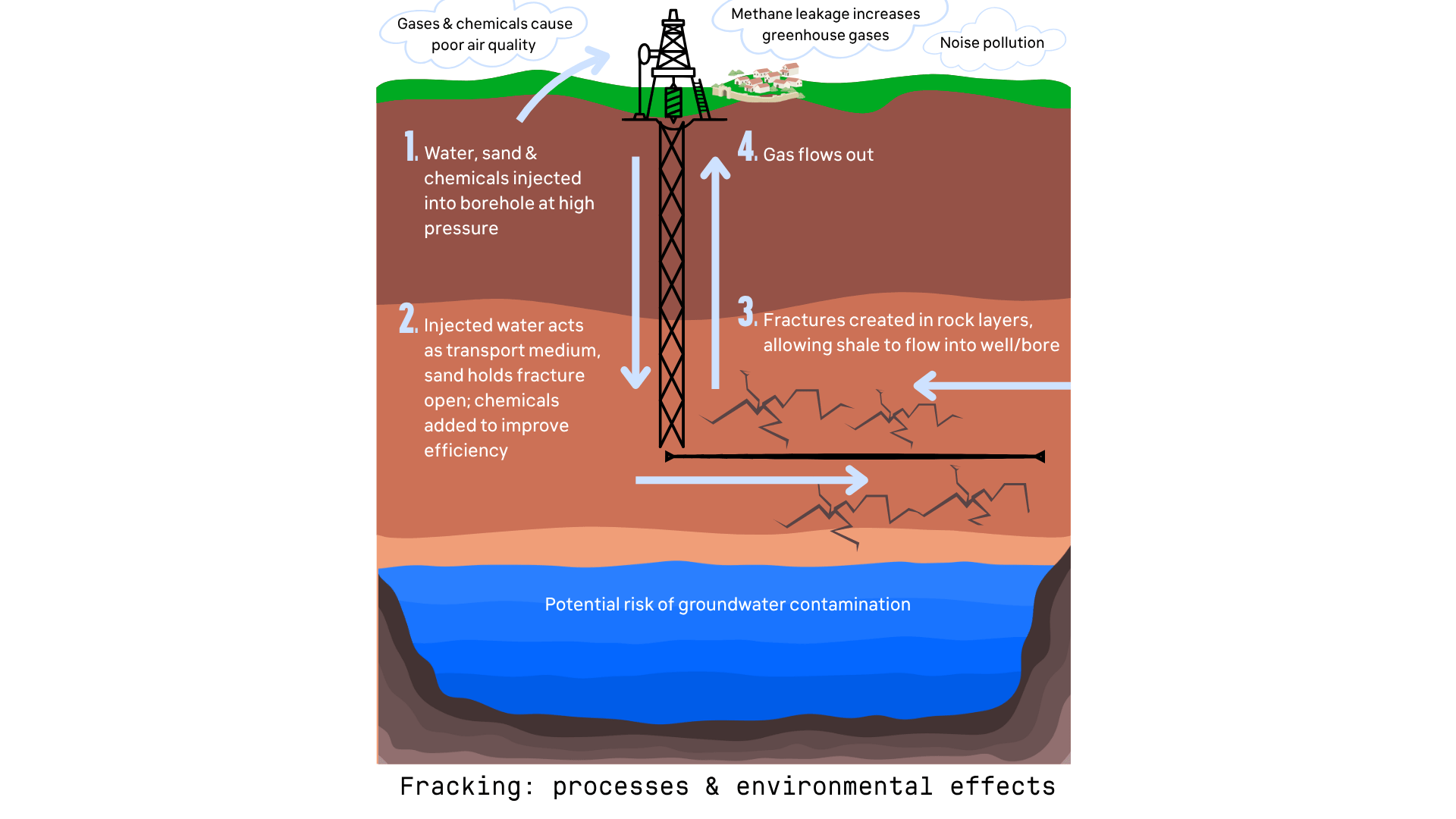
The shale gas is liquefied for transport, thereafter called liquefied natural gas (LNG). This process is so energy intensive and methane leaks are so frequent, that it makes this gas more polluting than coal. (5) It is transported to Europe, where it is processed in one of the large LNG import terminals in Rotterdam or Eemshaven. After Spain and France, the Netherlands is the largest European importer of LNG from the United States.
Because of its highly environmentally damaging nature, shale gas mining is forbidden in the Netherlands. That, however, has not stopped us from importing large quantities of shale gas from the US. In fact, up to 51% of all LNG imported by the Netherlands in 2022 was American shale gas; gas that is almost exclusively extracted by fracking (6).
From concerned mom to gas activist
In the state of Pennsylvania, new fracking sites are opened regularly – and not in remote areas. A map on the Protect PT website shows how fracking locations, pipelines and other gas infrastructure are located alarmingly close to houses and facilities like schools and daycares (7). “The allowed minimum distance is only 500 feet (150 meters)”, Gillian says. “We receive resident complaints all the time from people who live as far as two miles (3200 meters) away from a site and can still hear a constant noise. They can’t sleep. In particular, it can really impact children and how they socialise at school”, she explains.
Gillian’s activist career started in 2014, when she received a flyer in her mailbox. It was about a well pad (a site where fracking takes place) that would open in close proximity to her house. “At that time my children were toddlers and I was concerned about the potential health impacts.” With the help of the organisation that sent the flyer, Gillian started volunteering in actions against the proposed well pad. Eventually Gillian decided to take matters fully into her own hands and founded Protect PT. “I’m an accidental activist. They just pissed off the wrong mom.”
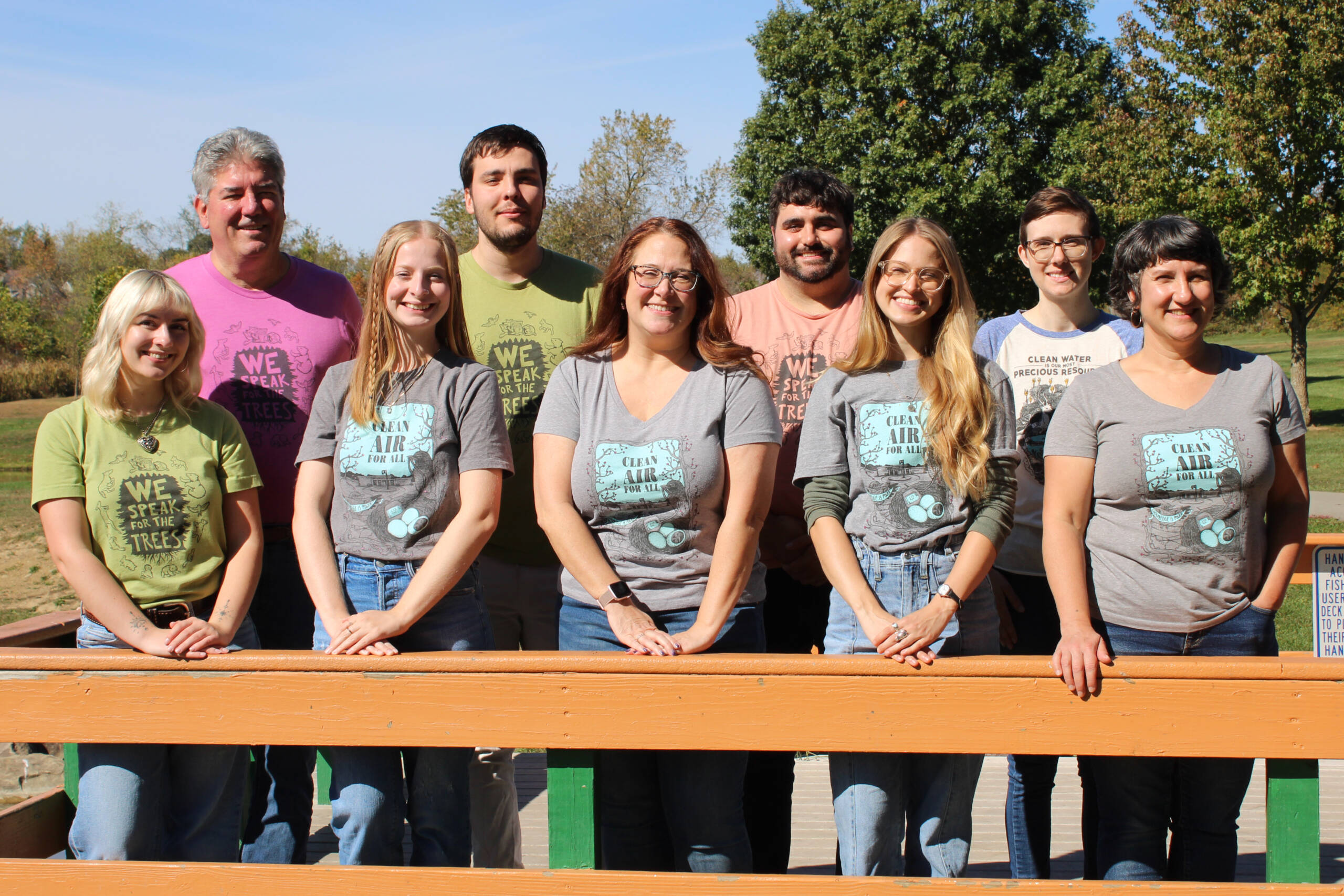
Project PT team
The first thing Gillian did was try to get other concerned parents on board. “I ran after the school bus, handing out my flyers to parents who were dropping off their children at the bus”, she recalls. Eventually people would join her in her protest and Protect PT actually managed to stop the building of this well pad.
This was the starting point for protesting against many more well pads that were proposed in the area. Over time Protect PT grew to nine employees, making it the largest organisation resisting fracking in the region. They share information, give lectures, organise events and fight against proposed drilling permits through legal ways.
Living with noise and radioactive waste
So what’s it like to have a fracking site near your house? Residents experience the effects of fracking intensely – day and night, Gillian explains while she shows all fracking sites on the map on their website. The process begins with drilling a hole underneath their feet. This well can reach several kilometers deep and stretch several hundred meters horizontally. “The drilling takes a long time, about a month, and it is a 24/7 operation. You can imagine how much noise comes from drilling multiple wells at the same time, while fracking takes place simultaneously. Also, all these activities are powered by large generators that require large amounts of diesel to light up the sites all night long”, says Gillian.
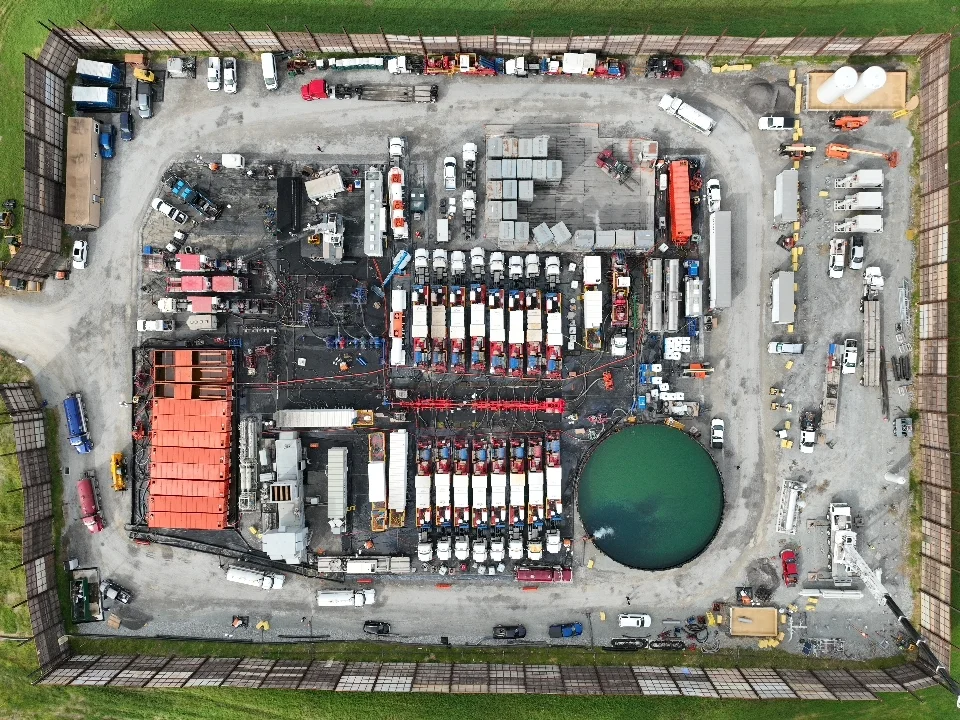
Well pad in Pennsylvania
After all this noise, light and vibrations, the real fracking begins. Large amounts of water, sand and chemicals are pumped into the well at high pressure. “Think of a huge fire hose; you can imagine how loud this process is. The noise travels for miles, and residents can hear this indoors with their windows completely shut.”
On top of this, fracking is far from a clean process and generates a lot of toxic and radioactive waste (8). “The drilling needs to reach shale layers that are ancient sea beds, which are rich in naturally occurring radioactive elements, heavy metals and other harmful substances that can cause cancer. The fracking process brings part of this to the surface.”
“People drink the water and become ill, or get a rash.”
Surprisingly, much of the solid waste is classified as non-hazardous in the US, and can therefore be dumped in any kind of landfill, close to people’s homes, from which toxic material can leach. The liquid waste is injected back into old shallow gas wells that are no longer in use. But many of these wells have very old casings and the pressure of pumping the water back can crack the casing, resulting in the risk of polluted water leaking into underground water sources. “People drink the water and become ill, or get a rash.”
How to win against the fracking industry
It is this type of hardship that Protect PT wants to shield their community from – and over the years they have been quite successful in doing so. One of their most significant achievements is the prevention of the construction of three well pads in their neighbourhood. However, their website is full of other initiatives, showing how broad their mission really is. For instance, they organise community events on topics like ‘living near shale gas’ and ‘environmental watchdog workshop’ to activate their community to take action. During such events, they show residents the impact of nearby fracking by sharing personal stories and research data they have gathered over the years.
Protect PT has prevented the construction of three well pads
“We go out and talk to people and we tell them: ’Did you know that this well site that’s going to be in your neighborhood could have up to 20 wells? It’s operating 24/7. It’s causing lots of truck traffic, noise, light, and air pollution, which can cause cancer.’” Gillian points out that once you explain these facts to people, they will go on and spread the facts further and attend local hearings. “Anybody that has any kind of sense is going to say I don’t want that in my backyard.”
Protect PT also runs a legal advocacy program to hold the oil and gas industry and government agencies accountable for the environmental and health impacts of fracking. But the legal route is a tough one. Stopping the construction of a well pad before the permitting is very difficult. “It is like a game of whack-a-mole: you stop one project, and a new one will quickly appear somewhere else. The fight never really stops.”
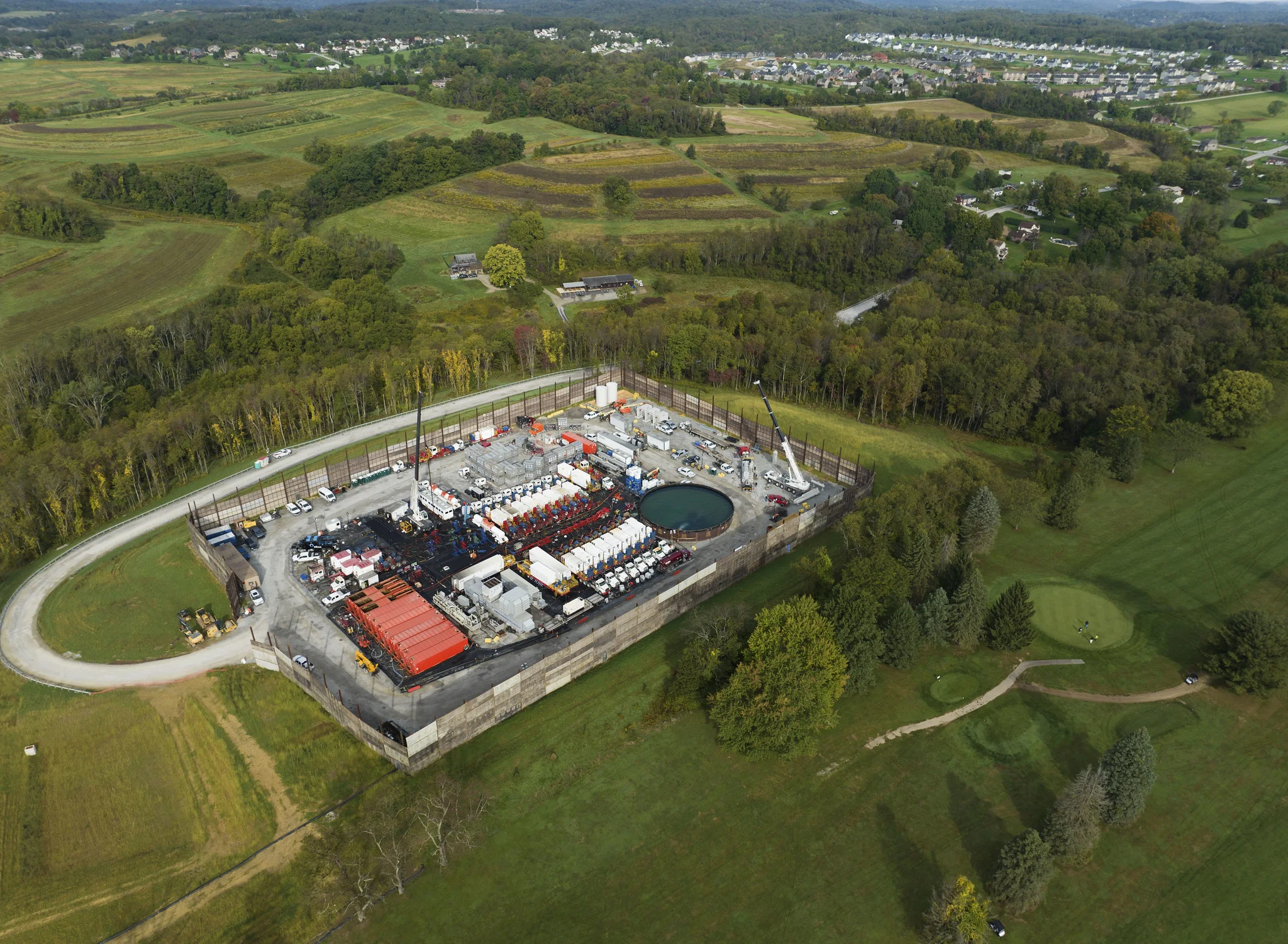
Well pad in Pennsylvania
What makes the process tiresome, is that there is no meaningful regulation protecting them. Local authorities often find themselves caught in a bind. They want to protect the community, but the industry brings money and the promise of jobs – and a threat of lawsuits if they don’t get their way. “It seems like it’s always money over well-being.”
Once a site is permitted and state approvals are granted, there’s no going back. “There is no system people can use to fight the permits. We have tried and we have failed. And so we will try again and again. We know we are in the right; we have all of the evidence, all of the testimony and the law on our side. Yet, we still fail because judges are also politicians. They’re supposed to make decisions based on case law, but that doesn’t always happen.”
Europe needs to act
Still, organisations like Protect PT are not giving up. They are currently fighting for more realistic protection for residents. “We are pushing for a state setback where the distance between a residential area and a well site should be at least half a mile (800 meters). Not that this is a safe distance, but like I said, the current minimum distance is only 500 feet (150 meters).”
“As long as Europe pays, they indirectly support the harm to our community”
The ultimate solution is simple, says Gillian: “Europe shouldn’t import this gas. As long as Europe pays, they indirectly support the fracking process in which our community is harmed. We all see that the oil and gas industry is trying very hard to not be obsolete, but if they don’t have the demand, then there’ll be no reason to do it. Several years ago during COVID, people were using less energy overall and the fracking operations in our district simply stopped. It was at least somewhat hopeful that such a big change could happen.”
One challenge is that many people in Europe may not realise that the gas heating their homes causes such harm elsewhere. “If the true costs were clearer, and communities affected by drilling received even a portion of the profits, the total price of oil and gas would increase dramatically. This might change how people think about their energy choices”, says Gillian.
“We all live on this planet together. The earth will still be here if we destroy our ability to drink fresh water and breathe fresh air, but we won’t. As humans we need to protect our own interests, and that means protecting the environment and not exploiting it for the sake of CEOs making money.”
What can you do?
Fracking in the U.S. can only continue if demand stays high. Because Europe, especially the Netherlands, is a major buyer and therefore helps finance it, it’s crucial that more people understand how this process harms communities living close to these fracking sites.
Please share this article and help raise awareness!
Read more
- New campaign: Break free from Trump Gas | Fossielvrij
- Trumpgas is een ramp voor het klimaat | Fossielvrij
- Our previous gas activist interview: “De Noordzee verdient respect, geen nieuwe gasboringen” | Fossielvrij
- A Pennsylvania study suggests links between fracking and asthma, lymphoma in children | Associated Press
- Podcast episode: How the Fossil Fuel Industry Sabotages Climate Action | Drilled
Sources
- Fracking 101 | Protect PT
- Shale gas development impacts on surface water quality in Pennsylvania | PNAS
- Fracking boom tied to methane spike in Earth’s atmosphere | National Geographic
- Methane and Climate Change | IEA
- Nederland draait op LNG uit Amerika, is dat een probleem? | Fossielvrij
- See 5.
- Fracking Map | Protect PT
- Oil and Gas Waste | Protect PT