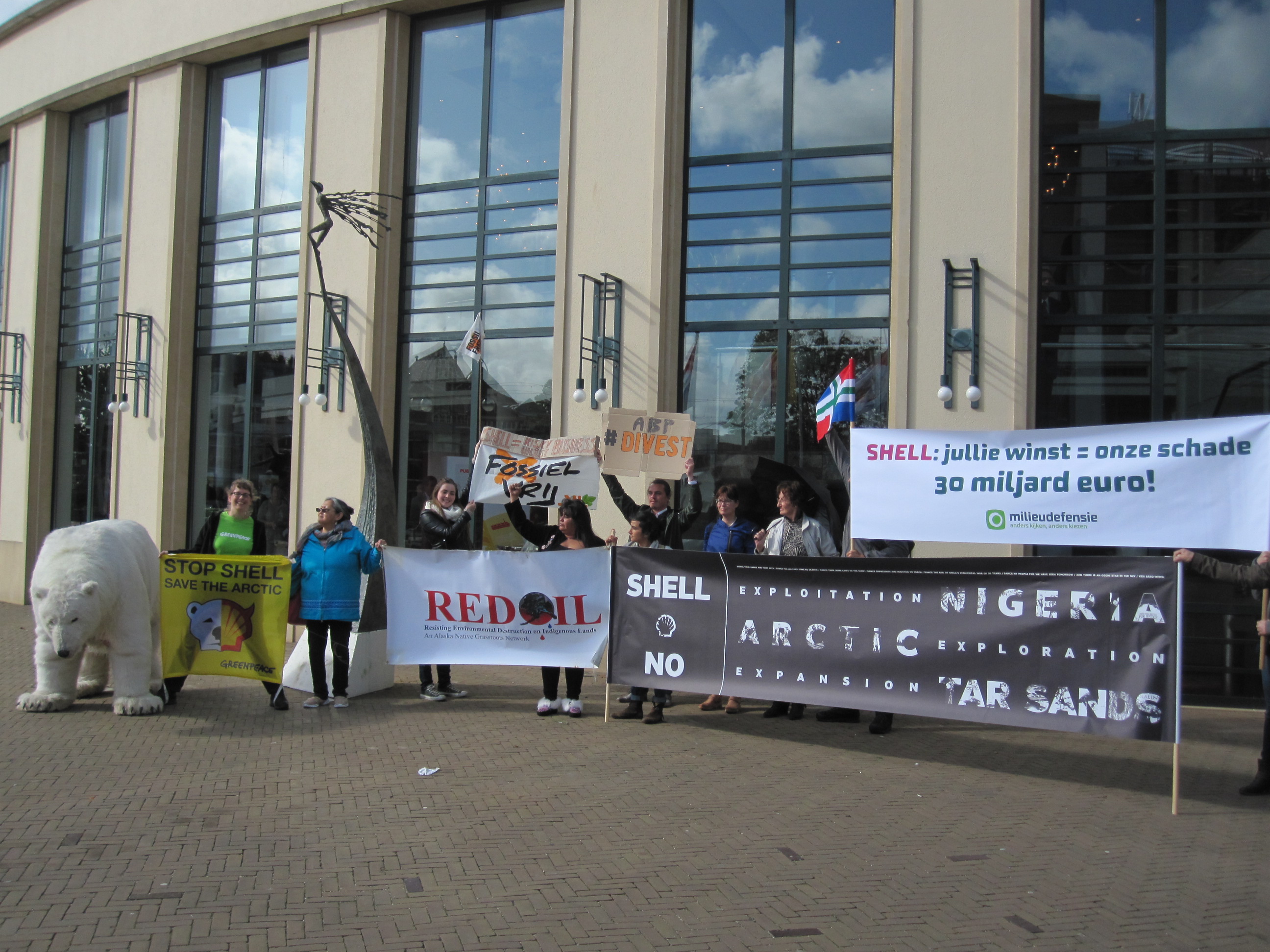
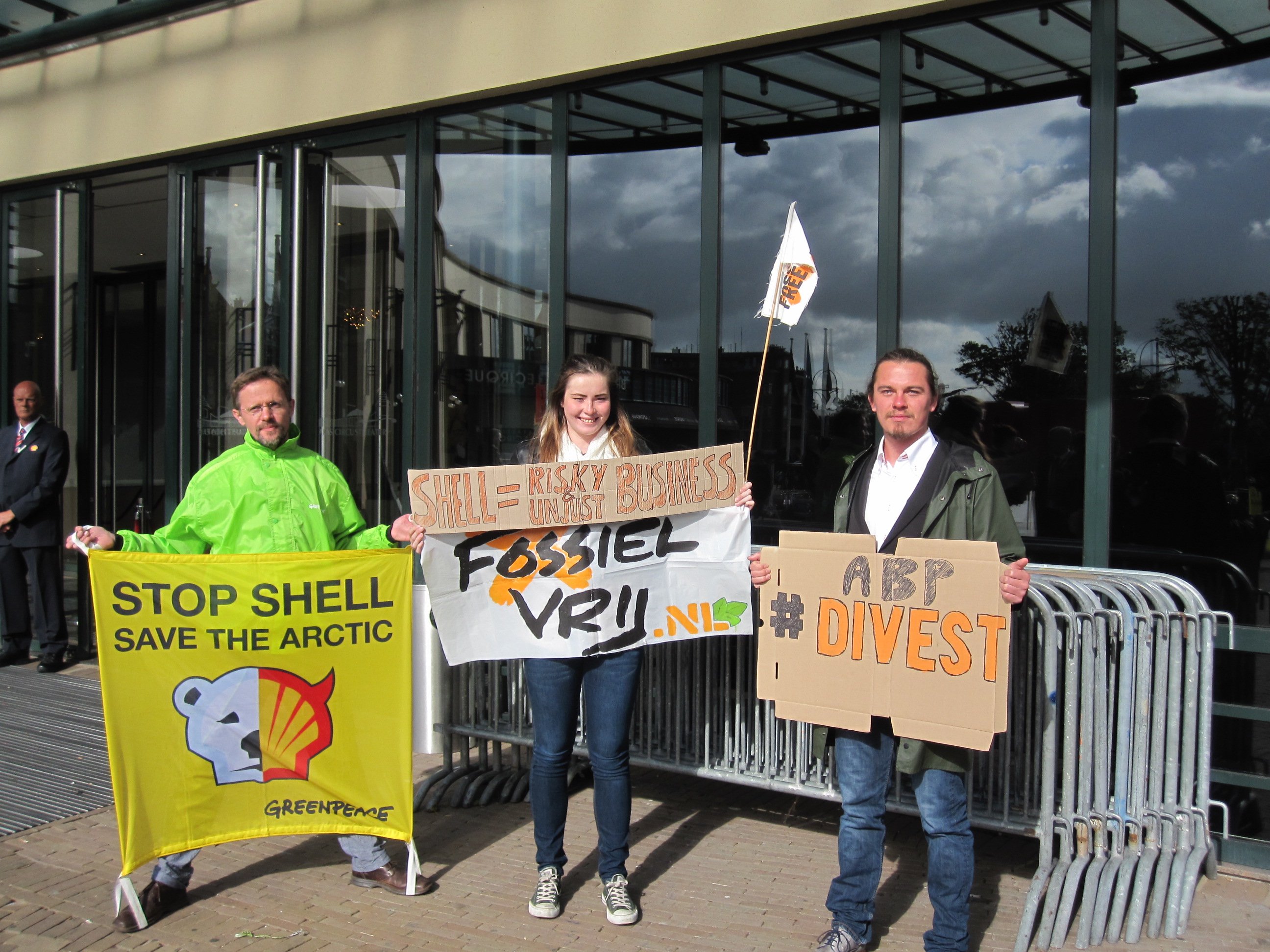
Yesterday the shareholders of Shell gathered in their yearly AGM in The Hague to discuss the plans of their company. Among the multiple critical questions Shell got from the communities of Groningen and the Arctic to worried investors was our own Cindy Coltman of the ABPfossielvrij team.
 She addressed the board of Shell representing the growing divestment movement worldwide. The ABP – the largest pension fund of the Netherlands – has invested over 1 billion Euro’s in Shell. She stated “Currently, a growing number of ABP pension holders are worried and uncomfortable with the fact that their pension is invested in fossil energy companies like Shell. These participants are asking their pension fund to divest – to move their money out of oil, coal and gas companies for both moral and financial reasons.”
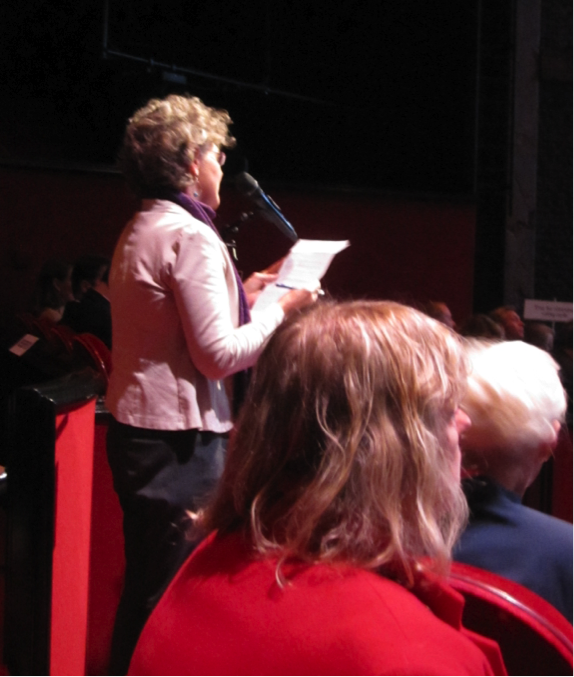 So the question Cindy asked was: “will the Board comment and tell us more about your position on stranded assets and tell us what evidence and assumptions are you giving pension funds such as ABP that Shell assets are not at risk of becoming stranded?
The answers received from CEO Mr. van Beurden emphasized Shell’s already publicly stated view in the opening remarks: “our view on stranded assets is that it ignores the reality of our industry and risks distracting from the real issues of the energy transition in the world.” Mr. van Beurden referred again to two points from his opening remarks- that the number of people who are growing out of poverty around the world need energy; and that the “even the most aggressive scenarios say that by mid-century, only 35-40% will be powered by renewable energy.” In a clarifying question, we lear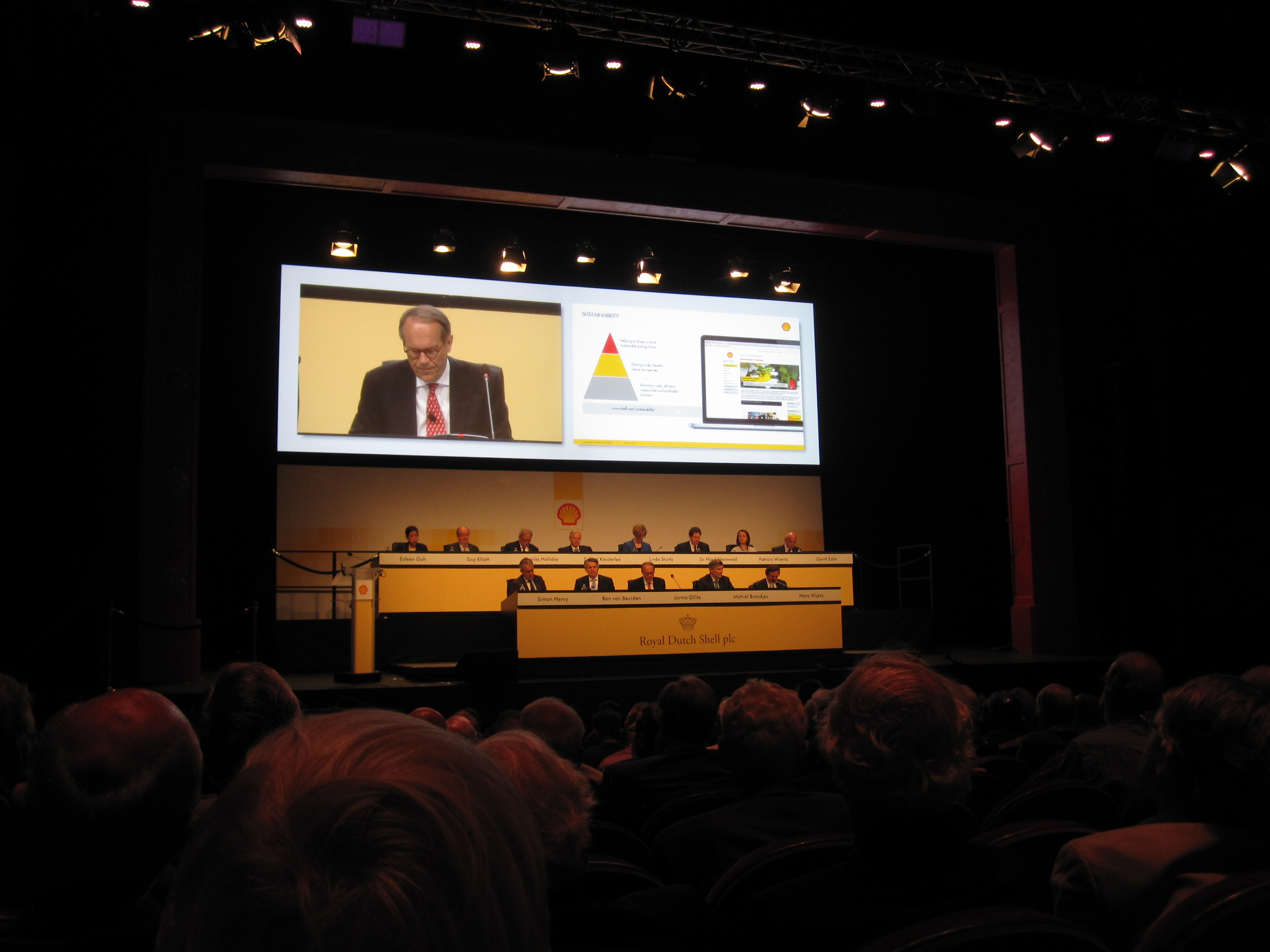 ned that Shell spends $150million per year in R&D on “alternatives” which includes expenditures on CCS. This is a paltry amount in the scheme of things, and points concretely to the lack of attention and investment Shell is putting into what it refers to as “longer term priorities in the future.” Later on in the afternoon, Mr. van Beurden made another statement about renewables: “At the moment, there is not an opportunity for us to participate in the industry because it is so tiny – only when the economy is ready for it we enter the world of renewables.”
Sadly what we can only conclude after listening to Mr. van Beurden today, is that despite the rheteric in Shell’s 2014 Sustainability Report and at times at the AGM, Shell management is using scenarios in its business planning that assume catastrophic global warming and is not putting serious money into renewables in the near future. Thus, if the institutional investors such as ABP pension fund are looking for clear answers to Shell’s leadership in the energy transition, they will be sorely disappointed. They also should continue to worry about the financial risks of their staying with Shell. To us, this dialogue today reinforces the reason for why we will continue to press Dutch pension funds to divest.
If you haven’t done so, join us and sign our petition at www.abpfossielvrij.nl/petitie to call on the ABP to divest from fossil fuels companies like Shell!